RT.com
25 Sep 2025, 01:10 GMT+10
Why Western recognition of Palestine won't change the conflict
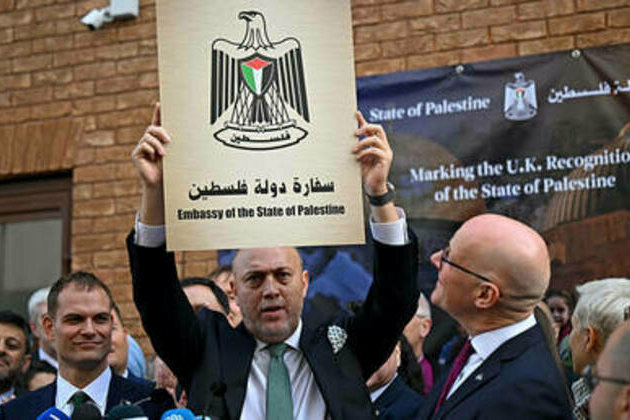
Several leading Western countries - Britain, Canada, Australia, and a group of EU members led by France - have announced their recognition of Palestinian statehood. They justified the move by saying that abandoning the principle of two states in historic Palestine, one Jewish and one Arab, is unacceptable. They pointed to the Palestinian people's legitimate rights and the need to prevent further violence.
Palestinian Authority leaders hailed the decision as the culmination of years of painstaking diplomatic work. Israel, by contrast, condemned it as an encouragement of terrorism and an obstacle to negotiations over the release of hostages.
On the surface, it looks like a decisive step in a region engulfed by conflict. In reality, it will change little. At best, recognition will be symbolic. At worst, it could further inflame the situation in the Middle East and beyond.
The Palestinian question has never gone away, and it cannot be resolved either by force or by diplomacy. Whether the creation of two states on the same land - which both peoples regard as exclusively their own - was ever truly possible is a matter for future historians. For now, prospects are grim.
The last serious attempt, the Oslo process of the 1990s and early 2000s, ended in failure. At the time, mediators from the US and Europe invested immense political capital, convinced that "peace was around the corner." What collapsed was not just a negotiation but an illusion - the belief, born of the West's victory in the Cold War, that the world could be remade along "the right side of history."
For a while, it seemed possible. All that appeared necessary were technical compromises and small concessions. When the talks fell apart, Western commentators blamed the shortsightedness of leaders, personal rivalries, or bad timing. In retrospect, it is clear those factors were surface symptoms of something deeper: an irreconcilable conflict rooted in religion, history, identity, and geopolitics.
Since then, the atmosphere has shifted entirely. The optimism of 30 years ago has vanished. Today Israel relies openly and solely on force. This is not an anomaly but a reflection of the broader collapse of the "liberal world order." When the spring is uncoiling everywhere, as it is now, brute power becomes the default instrument.
Western recognition of Palestine does nothing to change this balance. It does not make the Palestinian Authority more capable or more legitimate. Israel has shown that "moral pressure" from abroad has no effect. If anything, such moves may provoke the opposite of their stated aim - accelerating Israeli efforts to consolidate control over Gaza and even pursue de facto annexation of the West Bank.
The US shows no inclination to restrain Israel, and Arab neighbors are preoccupied with their own stability. That leaves only Palestinian resistance itself as an obstacle.
So why act now? The answer lies not in the Middle East but in Western domestic politics.
In societies where the Muslim population is growing, the Israel-Palestine question is a highly charged issue. By recognizing Palestine, governments offer a symbolic gesture to constituencies that demand it. At the same time, such moves distract from multiplying socio-economic problems at home. It is easier to argue about Palestine than to explain why welfare systems are creaking, public finances are strained, or living standards stagnate.
There is also Western Europe's strategic insecurity. Its influence on global affairs is collapsing - a fact even local analysts admit. Unable to define a coherent position on fundamental issues, Western Europe follows in Washington's wake, even when it is unnecessary or harmful. To disguise this impotence, its governments reach for bold but empty "pseudo-strategic" initiatives.
A telling example is the push to re-impose UN sanctions on Iran - a move that achieves nothing, but creates the illusion of relevance. Recognition of Palestine belongs in the same category.
The Palestinian issue will remain. It affects the Middle East, but also reverberates far beyond it. It cannot be solved by force or by the stale formulas of diplomacy. Something new is required - an approach that addresses the profound realities of the conflict, not the superficial theater of symbolic votes and press releases.
What Western Europe has offered instead is a performance by an increasingly mediocre political class. Leaders who cannot manage their own crises grasp at the Palestinian question as if it were stage scenery for their own domestic dramas. But the consequences will be real, even if unintended.
In the end, the recognition of Palestine by Western governments will not advance peace or improve Palestinian lives, or alter Israeli policy. It will, however, confirm Western Europe's decline: a sub-continent reduced to making empty gestures while the world moves on without it.
This article was first published in the newspaper Rossiyskaya Gazeta and was translated and edited by the RT team
Get a daily dose of Entertainment Sun news through our daily email, its complimentary and keeps you fully up to date with world and business news as well.
Publish news of your business, community or sports group, personnel appointments, major event and more by submitting a news release to Entertainment Sun.
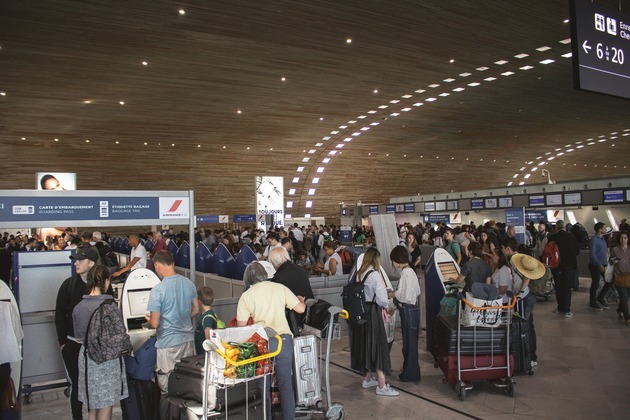
More InformationBRUSSELS, Belgium: A cyberattack that crippled check-in systems at several major European airports is still disrupting travel, forcing...
WASHINGTON, D.C.: President Donald Trump said media mogul Rupert Murdoch, his son Lachlan Murdoch, and Dell Technologies founder Michael...
SAO PAULO, Brazil: Brazil's health minister said this week he is not attending the United Nations General Assembly in New York after...
DUBAI, U.A.E.: Pakistan's defense minister has confirmed that Saudi Arabia would fall under Islamabad's nuclear umbrella if required...
WASHINGTON, D.C.: The White House rushed to calm fears among immigrant workers after President Donald Trump's plan to impose a $100,000...
ARLINGTON COUNTY, Virginia: Striking Boeing Defense workers overwhelmingly backed a contract proposal drafted by their union, even...
Why Western recognition of Palestine won't change the conflict Several leading Western...
New Delhi [India], September 24 (ANI): Actor Sonu Sood on Wednesday appeared before the Enforcement Directorate (ED) for questioning...
Guwahati (Assam) [India], September 24 (ANI): Late singer Zubeen Garg's wife, Garima Saikia, shared the details of the singer-actor's...
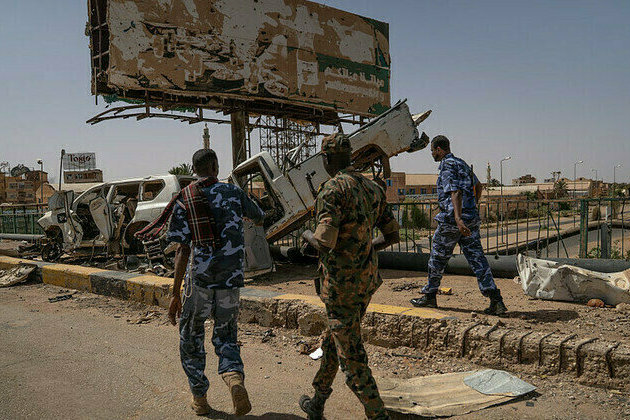
Prime Minister Kamil Idris has met with the organizations commission chair on the sidelines of the 80th UN General Assembly Sudan...
AJMAN, 24th September, 2025 (WAM) -- H.H. Sheikh Ammar bin Humaid Al Nuaimi, Crown Prince of Ajman and Chairman of the Executive Council,...
AJMAN, 24th September, 2025 (WAM) -- H.H. Sheikh Humaid bin Rashid Al Nuaimi, Supreme Council Member and Ruler of Ajman, in the presence...